The Shadow Power: How the Illuminati Allegedly Influences World Leaders and Global Events
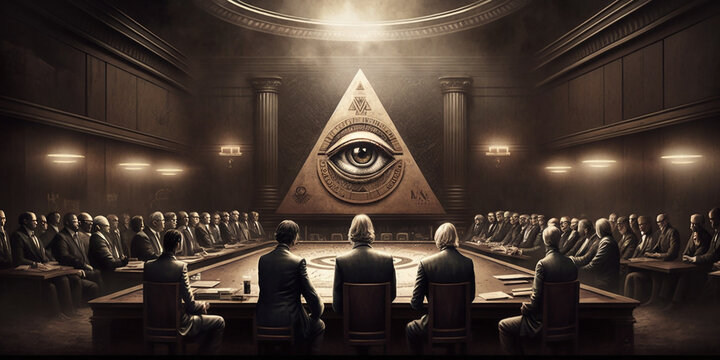
For centuries, the Illuminati has been shrouded in mystery, whispered about in the corridors of power and debated in coffee shops and online forums alike. Originally founded in Bavaria in 1776 as a secret society promoting enlightenment ideals, the group has long been rumored to wield influence far beyond its historical origins. Today, conspiracy theorists claim that this clandestine organization continues to pull the strings behind world events, manipulating elections, markets, and even wars.
Stories of the Illuminati often start with their supposed presence in the highest echelons of government. Politicians, business magnates, and cultural icons have been accused of either being members or being influenced by the society’s hidden hand. From cryptic gestures at public appearances to the strategic timing of global crises, believers argue that the organization’s fingerprints are everywhere—carefully concealed, yet unmistakably present to those who know what to look for.
The group’s alleged influence is said to extend to global finance as well. Economic crashes, sudden shifts in market trends, and policy decisions that favor certain elites over the masses are frequently attributed to secretive interventions. Critics argue these patterns are too deliberate to be mere coincidence, suggesting that the Illuminati may have an invisible hand in shaping the global economy for its own mysterious purposes.
Pop culture has also played a crucial role in fueling the fascination with the Illuminati. Symbols purportedly linked to the society—pyramids, all-seeing eyes, and intricate geometric patterns—appear in music videos, films, and advertising campaigns. Fans dissect these images for hidden meanings, interpreting them as proof that influential celebrities are either complicit in the organization’s plans or pawns in a much larger game. Social media amplifies these theories, creating an endless feedback loop where speculation feeds curiosity, and curiosity fuels further speculation.
Yet, amid the intrigue, skepticism remains. Historians and experts often dismiss contemporary claims as exaggerations or coincidences, pointing out that many alleged symbols and actions can be explained by artistic license, marketing strategies, or pure happenstance. The human tendency to find patterns in randomness—known as apophenia—can make the most innocent actions seem sinister when viewed through the lens of conspiracy. Nonetheless, the idea of a hidden power controlling global affairs is compelling, offering a narrative that is simultaneously thrilling and terrifying.
For those who follow these theories, the question is not just whether the Illuminati exists, but how far-reaching its influence might be. Are world events truly orchestrated by a secret society, or are these connections the product of imagination and suspicion? High-profile deaths, political scandals, and economic upheavals are scrutinized as possible evidence, with believers claiming that no detail is too small to escape the society’s watchful eye. Each rumor, each unexplained occurrence, adds another thread to a web that seems increasingly intricate and ominous.
The allure of the Illuminati lies in its combination of secrecy and power. Humans are naturally drawn to stories that suggest hidden forces shape their lives. The society, whether real or mythologized, embodies that fear of the unseen: the notion that our world is not as it seems and that powerful entities manipulate events for their own gain. In an era of information overload and constant connectivity, the possibility of a shadow power guiding global affairs resonates more than ever.
Ultimately, the debate over the Illuminati’s existence and influence is unlikely to be settled anytime soon. For believers, the signs are everywhere; for skeptics, they are shadows cast by coincidence and human imagination. Regardless of where one stands, the fascination with this secretive organization continues to captivate, disturb, and intrigue. It is a story of mystery, power, and fear that endures, proving that some legends, no matter how unverifiable, refuse to fade into obscurity.
Whether conspiracy or reality, the myth of the Illuminati persists as one of the most enduring and chilling narratives of our time—a reminder that in a world full of uncertainty, the idea of a hidden hand guiding humanity remains irresistibly compelling.