Beneath the Border: Inside the Cartel Tunnels Smuggling Drugs Into the US
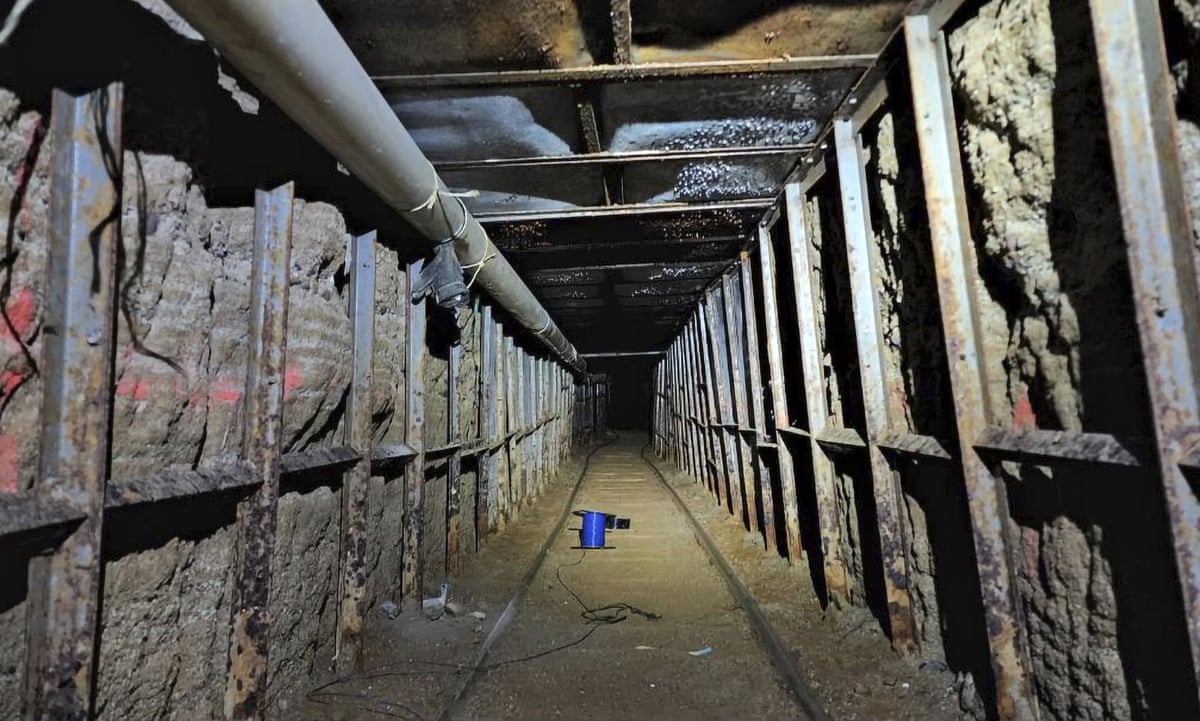
Deep beneath the scorching desert, hidden from sight, lies a labyrinth of tunnels carved by ruthless cartels to smuggle drugs across the U.S.-Mexico border. These secret passageways, some reinforced with wood, ventilation, and even electricity, reveal a dark underworld where billion-dollar operations thrive just a few feet below unsuspecting towns. For authorities, every tunnel discovered is proof of how far cartels will go — and how dangerous the fight to stop them has become.
For decades, border agents have known about the tunnels. Some are crude, nothing more than narrow dirt paths dug hastily beneath fences. But others are feats of criminal engineering: concrete-lined passageways stretching hundreds of yards, complete with lighting, rail tracks, and ventilation systems. In some cases, the tunnels are so sophisticated that they rival legitimate construction projects — except their sole purpose is to funnel narcotics, weapons, and even people across one of the most heavily policed borders in the world.
One of the most shocking discoveries came in Otay Mesa, California, where authorities uncovered a tunnel nearly half a mile long connecting a warehouse in Tijuana to an industrial building on the U.S. side. Inside, investigators found rails for carts, an elevator shaft, and high-powered fans. Cartels had turned the underground corridor into a drug pipeline capable of moving tons of methamphetamine and fentanyl undetected. “It looked like something out of a movie,” one agent recalled. “They had spent months, maybe years, digging it out. The resources they put into it show just how lucrative this business is.”
Officials say the tunnels are a direct response to increased border security above ground. As walls, surveillance cameras, and patrols made it harder to move contraband openly, cartels went underground — literally. Using industrial drills, construction equipment, and sometimes even corrupt engineers, they carved out the hidden arteries that now serve as lifelines for their trafficking empires.
The dangers of investigating these tunnels are immense. Agents who enter them risk collapse, suffocation, and ambush. “You’re crawling into a pitch-black tunnel, not knowing if someone is waiting for you on the other side,” said Agent Raul Martinez of U.S. Customs and Border Protection. “Every step could be your last if the structure gives way.”
Yet despite the risks, law enforcement has had some successes. Since 1990, authorities have discovered more than 230 cross-border tunnels, mostly in California and Arizona. Each discovery is celebrated as a blow to cartel logistics, but officials admit the number of undiscovered tunnels may be far higher. “For every tunnel we find, there could be two or three more we don’t,” one Department of Homeland Security official acknowledged.
The tunnels also highlight the sheer determination of cartels. Drug lords invest millions of dollars into constructing them, knowing that a single shipment can generate enough profit to cover costs many times over. Fentanyl, for example, is so potent that just a few pounds can be worth millions on the U.S. market. When trafficked through tunnels, the drug bypasses checkpoints and detection systems that have grown increasingly sophisticated.
Smugglers are also known to use the tunnels not only for drugs but for human trafficking. Migrants desperate to reach the U.S. sometimes pay smugglers to lead them underground, where they risk suffocation or abandonment. Survivors describe terrifying journeys in cramped, airless spaces where they could hear water dripping from the ceiling and dirt shifting around them.
Communities near the border live with the uneasy knowledge that the ground beneath their feet may conceal criminal highways. Residents of Nogales, Arizona, have reported strange vibrations, unexplained sinkholes, and even sounds of digging beneath their homes. “It’s unsettling,” one resident said. “You don’t know if there’s a tunnel under your street or if the house next door is covering an entrance.”
Authorities face constant challenges in combating the tunnel networks. Detection technology, including ground-penetrating radar and seismic sensors, has improved, but smugglers adapt quickly. Some tunnels are dug deep enough to evade radar, while others are short-lived “pop-up tunnels” used for a single smuggling run before being abandoned.
The U.S. government has poured millions into tunnel detection and response teams, but experts say the fight is a never-ending battle. “The cartels innovate constantly,” explained Dr. Elena Ramirez, a criminologist who studies transnational crime. “For them, it’s a business. If one tunnel is shut down, they start another. The demand for drugs in the United States ensures they will keep digging.”
The discovery of each tunnel also sparks broader political debates. Advocates of stronger border walls argue that the underground passages prove the need for more comprehensive security. Critics counter that walls do little to stop smugglers who simply burrow underneath, and that the real solution lies in addressing demand for drugs inside the United States.
For frontline agents, however, the politics matter less than the immediate reality: a dangerous underground war waged one tunnel at a time. Each discovery requires coordination between U.S. and Mexican authorities, often hampered by corruption and limited resources. Yet both sides agree that shutting down the tunnels is crucial to disrupting cartel power.
Back in Otay Mesa, the massive tunnel discovered in 2022 was ultimately sealed with concrete after being mapped by investigators. But for every tunnel filled, another is likely being dug elsewhere in the desert. Cartel builders work quietly, hidden from view, chiseling away at the earth as communities above carry on with daily life, unaware of the illicit highways taking shape below.
The underground war along the U.S.-Mexico border is a stark reminder of the cartels’ adaptability and ruthlessness. What lies beneath is not just dirt and stone, but the physical embodiment of an industry that thrives on secrecy, ingenuity, and violence. For the agents tasked with finding and destroying these hidden passageways, the fight is grueling — but essential.
Because as long as demand remains high and profits astronomical, the cartels will keep digging. And for every tunnel sealed, another may already be waiting in the shadows below, a silent artery of the drug trade, stretching beneath the border and into America’s heartland.