A powerful storm system unleashed relentless rain Thursday across the Mid-Atlantic and Northeast, turning highways into rivers and crippling air travel from Washington D.C. to New York City. As rainfall totals soared past 5 inches in some areas, the National Weather Service issued flash flood emergencies, warning of “life-threatening” conditions and urging residents to stay off the roads.
🚨 A Deluge Without Warning
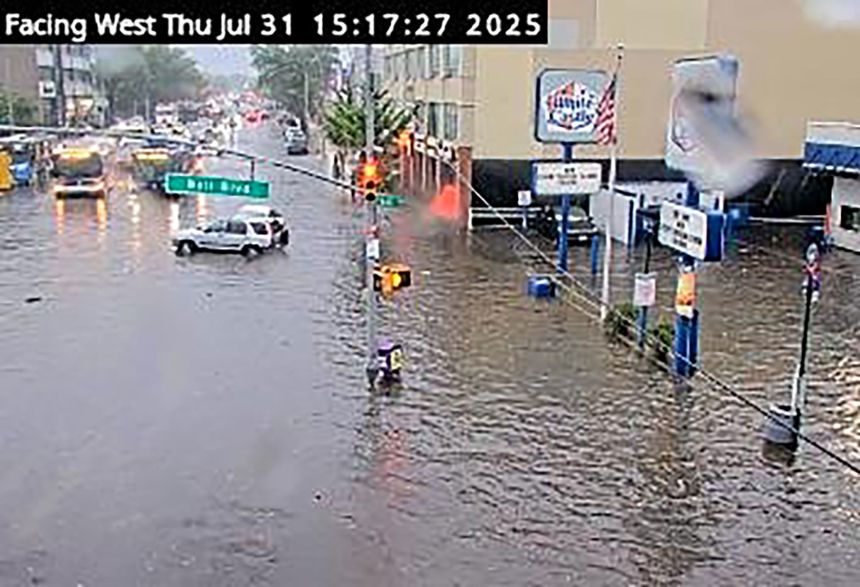
By mid-afternoon, what began as scattered thunderstorms escalated into a sprawling atmospheric assault. Within hours:
-
Major roads in Northern Virginia, Maryland, and New Jersey were underwater
-
New York’s FDR Drive and Bronx River Parkway were closed due to flooding
-
More than 600 flights were delayed or canceled at JFK, LaGuardia, Reagan National, and Newark airports
-
Emergency responders conducted dozens of high-water rescues from stranded vehicles
“The water rose faster than I’ve ever seen,” said Michael Rodriguez, a commuter caught in rising floodwaters in Queens. “One minute the street was wet. The next, it was gone.”
🗺️ Flood Zones Expand Hourly
Flash flood warnings remain in effect from the Potomac River Basin all the way up to the Lower Hudson Valley, with forecasters calling for another 2 to 4 inches of rain through Friday morning.
Urban areas with poor drainage are at extreme risk. Parts of downtown D.C., Philadelphia suburbs, and Brooklyn have already seen basement and street-level flooding.
Meteorologists attribute the intensity of the storm to a stalled low-pressure system tapping into tropical moisture from the Atlantic.
“This is the kind of event that only needs a few hours to cause days of disruption,” said NOAA meteorologist Linda Tran.
✈️ Airports Paralyzed, Travelers Frustrated
At New York’s JFK Airport, departure boards were lit up with red “CANCELLED” notices as travelers scrambled to rebook flights.
LaGuardia saw taxiways temporarily submerged, while Reagan National Airport suspended takeoffs for 40 minutes due to low visibility.
Some passengers reported being stranded on runways for over two hours as lightning forced ground crews indoors.
📉 Infrastructure Buckling Under Pressure
This storm is the latest in a growing pattern of extreme weather events overwhelming outdated urban infrastructure. Cities like D.C., Baltimore, and New York—many with century-old drainage systems—are struggling to adapt.
Climate scientists warn that as the planet warms, storms like this will only grow more frequent and intense.
“What used to be a once-a-decade storm is now once-a-year,” said Dr. Arjun Patel from Columbia Climate School.
🧭 What Happens Next?
Emergency declarations have been issued in multiple counties, and FEMA teams are on standby. Schools in some districts are switching to remote learning on Friday, and public transit across the tri-state area is operating on limited schedules.
The storm is expected to move slowly northeastward, bringing continued flooding, tree damage, and power outages through the weekend.
📣 Officials Urge: Stay Home, Stay Safe
Residents are being urged to:
-
Avoid driving unless absolutely necessary
-
Charge devices and store drinking water in case of outages
-
Monitor weather alerts and city emergency channels
As one emergency responder put it:
“Don’t risk your life for a commute. If the road looks like a river—it is.”